
There’s a particular kind of frustration many women experience in their 40s. Clothes fit differently. Waistlines thicken. The stomach feels softer, heavier, and less responsive to all the things that used to work before. The same exercise routine no longer shifts weight in the same way. The same diet suddenly feels ineffective.
And perhaps most frustrating of all, women are told the same old thing: eat less and move more.
But perimenopause changes far more than body weight alone. It affects hormones, muscle mass, metabolism, fat distribution, appetite, sleep, recovery, and the way the body responds to exercise itself.
The weight gain many women experience during perimenopause is very real – particularly the tendency towards abdominal and visceral (organ) fat. But equally, it does not have to become an inevitable downhill spiral. Understanding what is happening physiologically is often the first step towards regaining some control over it.
What Actually Is Perimenopause?
Perimenopause is the transitional phase leading up to menopause, where ovarian hormone production becomes increasingly inconsistent.
Importantly, hormones during perimenopause are not simply “low” – they fluctuate. Often wildly. Oestrogen may surge one week and drop the next. Progesterone gradually declines. Ovulation becomes less regular. Cycles become unpredictable.
This transition usually begins in the early 40s, often years before periods stop entirely.
Alongside it can come:
- weight gain
- sleep disruption
- fatigue
- anxiety
- low mood
- brain fog
- bloating
- poorer exercise recovery
- increased abdominal fat
The body begins responding differently because the hormonal systems regulating metabolism, appetite, fat storage and muscle maintenance are changing.
Why Does Weight Gain Happen in Perimenopause?
1. Oestrogen Changes Where Fat Is Stored
Oestrogen plays a major role in fat distribution throughout a woman’s reproductive years.
Higher oestrogen levels tend to favour fat storage around the hips, thighs and buttocks.
As oestrogen fluctuates and gradually declines during perimenopause, fat storage patterns begin shifting towards the abdomen instead.
This is why many women suddenly notice:
- thickening around the waist
- increased abdominal fullness
- loss of waist definition
- a “menopause belly” appearing seemingly overnight
Importantly, more of this fat becomes visceral fat – fat stored deep beneath the skin, around abdominal organs.
Unlike subcutaneous fat beneath the skin, visceral fat is more metabolically active and inflammatory. Higher levels are associated with:
- insulin resistance
- cardiovascular disease
- type 2 diabetes
- high cholesterol
- metabolic syndrome
Midlife weight gain is therefore not purely cosmetic. It reflects genuine metabolic changes happening inside the body.
2. Muscle Mass Begins Declining
One of the most overlooked parts of perimenopause is the gradual loss of muscle mass.
Muscle naturally declines with age, but oestrogen also helps support muscle maintenance, repair and recovery. As levels change, preserving muscle becomes harder – particularly in women who are inactive, chronically dieting, or relying solely on cardio exercise.
This matters because muscle is metabolically active tissue. Even at rest, it requires energy simply to maintain itself. A body with more lean muscle mass burns more calories across the day than a body with less muscle mass, even while sitting still.
This contributes to what’s known as resting metabolic rate – the energy the body uses simply to stay alive and function.
As muscle mass declines:
- resting calorie expenditure falls
- strength reduces
- recovery slows
- insulin sensitivity worsens
- body composition changes more easily
This helps explain why many women maintain a similar weight but still feel “softer,” less toned, or more prone to fat accumulation around the middle.
3. Insulin Sensitivity Changes
Hormonal changes during perimenopause can also affect how efficiently the body responds to insulin.
Insulin helps move glucose from the bloodstream into cells for energy. As insulin sensitivity declines, the body becomes less efficient at handling large spikes in blood sugar.
This can lead to:
- stronger energy crashes
- increased cravings
- easier fat storage
- greater hunger after highly processed meals
- more difficulty losing abdominal fat
Many women notice foods they previously tolerated well suddenly leave them feeling sluggish, bloated or hungry again soon after eating.
This does not mean carbohydrates are inherently bad. It means blood sugar stability matters more than it once did.
4. Cortisol, Stress and Sleep
Perimenopause is often accompanied by disrupted sleep, increased stress sensitivity and elevated cortisol levels.
Poor sleep alone can influence:
- hunger hormones
- cravings
- insulin sensitivity
- exercise recovery
- fat storage patterns
At the same time, cortisol – the body’s primary stress hormone – is strongly linked with abdominal fat accumulation. Chronic stress and exhaustion can encourage the body to preferentially store fat around the abdomen.
This creates a frustrating cycle:
- poor sleep increases cravings and fatigue
- fatigue reduces motivation and recovery
- stress hormones rise
- abdominal fat becomes more stubborn
- women compensate by eating less or over-exercising
- recovery worsens further
For many women, the issue is not lack of effort, but a body struggling under the combined pressure of hormonal fluctuation, stress, poor sleep and changing metabolism.
Why the Belly Fat Feels So Difficult to Shift
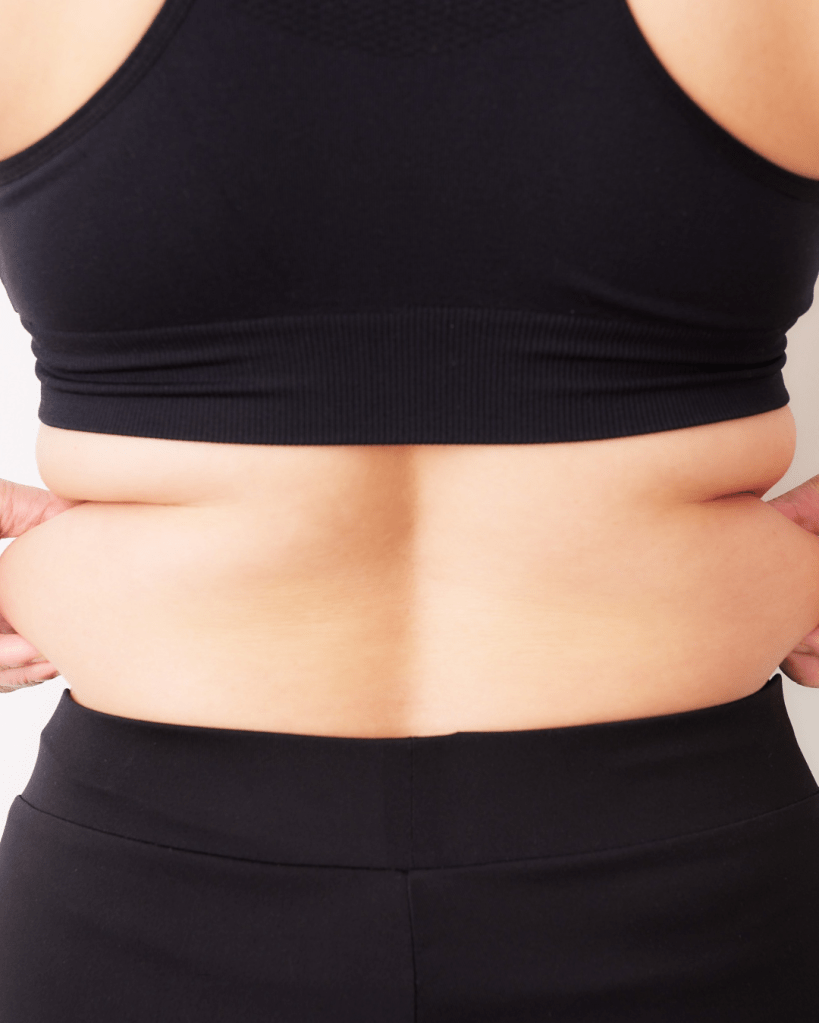
Visceral abdominal fat behaves differently from fat stored elsewhere in the body. It is hormonally active, inflammatory, and closely linked with insulin resistance and stress hormones.
Unfortunately, many women respond by becoming increasingly restrictive:
- eating too little
- skipping meals
- overdoing cardio
- under-fuelling exercise
- chronically dieting
In reality, this often backfires. Excessive restriction can worsen muscle loss, increase stress hormones, impair recovery and further slow metabolic health over time.
Why Old Strategies Stop Working
Perimenopause is often the stage where women realise they can no longer “undo” lifestyle habits as easily as before.
Long workdays fuelled by caffeine. Poor sleep. Wine most evenings. Convenience foods. Skipping meals and overeating later. Endless cardio with very little resistance training.
The body becomes less forgiving of these patterns because the hormonal environment has changed. The strategy therefore needs to evolve alongside the physiology.
What Women Should Focus On Instead
Prioritising Protein
Many women dramatically under-eat protein during midlife.
Protein becomes increasingly important during perimenopause because it helps:
- preserve muscle mass
- support recovery
- stabilise blood sugar
- improve satiety
- reduce muscle loss during weight loss
Without adequate protein intake, the body is more likely to lose muscle alongside fat, further slowing metabolic function.
Strength Training Becomes Essential
If there is one form of exercise women should not neglect during perimenopause, it is resistance training.
Strength training helps:
- preserve and build muscle
- improve insulin sensitivity
- support metabolic health
- strengthen bones
- improve balance and mobility
Importantly, it changes body composition far more effectively than cardio alone. Walking remains excellent for cardiovascular health, mental wellbeing and general mobility. But for many women, walking alone is no longer enough to counterbalance the muscle and metabolic changes occurring during perimenopause.
Exercise Needs to Become Smarter, Not More Punishing
Many women respond to weight gain by exercising harder and eating less.
But recovery capacity changes during this stage of life. Excessively intense exercise combined with under-fuelling can worsen fatigue, sleep, stress hormones and muscle breakdown.
Exercise during perimenopause often benefits from balance:
- resistance training
- cardiovascular fitness
- walking
- mobility work
- adequate recovery
- consistency over punishment
The goal shifts from simply “burning calories” to protecting muscle and supporting longterm metabolic health.
Blood Sugar Stability Matters More
Highly processed foods become harder for many women to tolerate metabolically during perimenopause.
Meals built around:
- protein
- fibre
- healthy fats
- minimally processed carbohydrates
often improve satiety, stabilise energy levels and reduce cravings more effectively than ultra-processed snack foods and sugary convenience meals.
Alcohol can also become more disruptive during this stage, affecting sleep, recovery, appetite and abdominal fat accumulation.
Sleep and Stress Are Not Optional Extras
Poor sleep directly affects hormones involved in hunger, cravings, insulin sensitivity and fat storage. Chronic stress further amplifies the tendency towards abdominal fat accumulation.
For many women, improving sleep quality and stress management becomes just as important as improving nutrition itself.
What About HRT?
Hormone replacement therapy is not a magic weight-loss treatment. However, for some women, stabilising oestrogen levels may indirectly support:
- sleep
- energy
- mood
- exercise recovery
- muscle preservation
- visceral fat accumulation
The decision around HRT is individual and should involve a balanced discussion with a healthcare professional.
Summary
Perimenopause naturally predisposes women to weight gain. But women are often led to believe that eating less and exercising more should be enough to reverse the changes.
In reality, the body is undergoing a major hormonal and metabolic transition that affects far more than periods alone.
Understanding these changes matters because it allows women to respond intelligently rather than hopelessly.
The goal during perimenopause is not punishing exercise or extreme dieting. It is preserving muscle, supporting metabolic health, improving resilience, and adapting to a body whose physiology is changing.
Information and other content provided in these blogs should not be construed as medical advice and should not be considered a substitute for professional medical expertise. If you have any medical concerns, you should consult with your health care provider.

 Health & Wellbeing with Dr Joanna Taylor
Leave a comment