
Fibre isn’t particularly exciting. It doesn’t get a place in the spotlight. It’s not a dinner party conversation. It’s rarely something people think about … until there’s a problem.
Although often underestimated and misunderstood, fibre does a lot of heavy lifting, with a leading role in digestion, blood sugar regulation, appetite control, and long-term health outcomes.
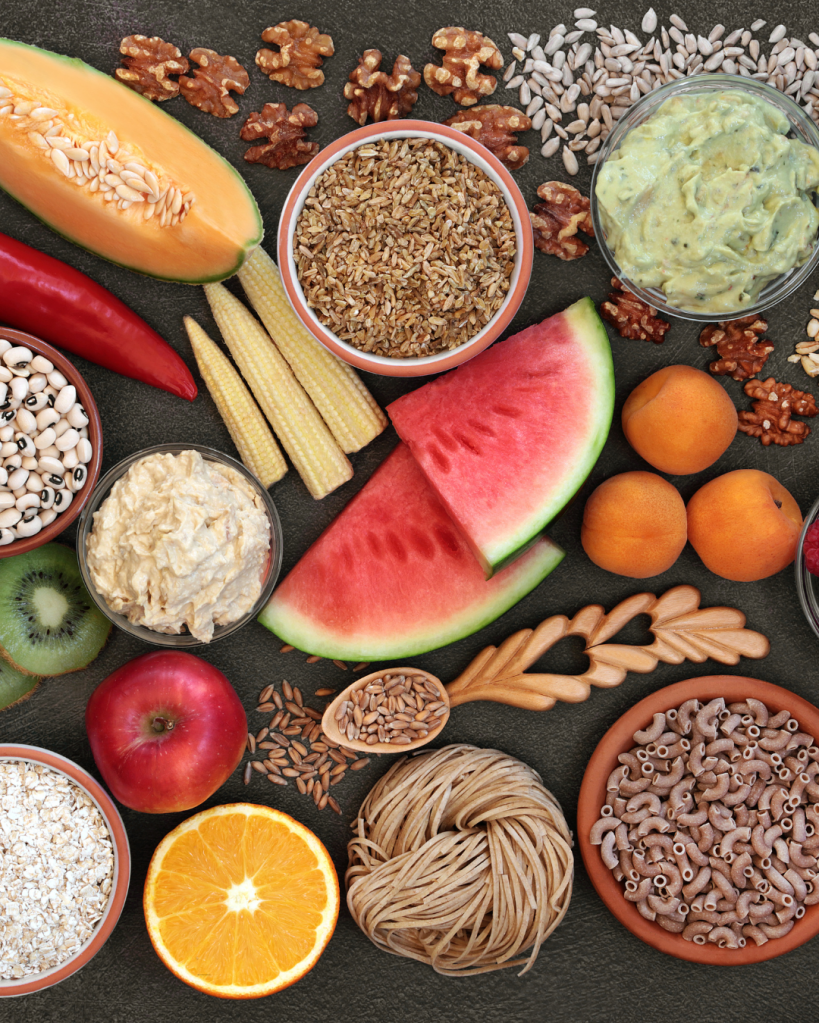
What is Fibre?
Fibre is a type of carbohydrate found in plant-derived foods. It isn’t broken down and absorbed like most food. Instead, fibre travels through the gut, affecting how food is processed, how nutrients are absorbed, and how waste is passed.
There are two main types:
- Soluble fibre – absorbs water and forms a gel-like substance. This slows digestion, helping to stabilise blood sugar levels and reduce cholesterol absorption.
- Insoluble fibre – adds bulk to stool and helps a smooth transit of waste through the digestive tract.
Most plant-based foods contain a mix of both, and your body benefits from having both on board.
Where Do We Get Fibre From?
Fibre is ONLY found in plant-based foods.
- Whole grains – oats, brown rice, wholegrain bread, quinoa
- Legumes – lentils, chickpeas, beans
- Vegetables – broccoli, carrots, leafy greens
- Fruit – (raw with skins on) – apples, pears, berries
- Nuts and seeds – almonds, chia seeds, flaxseeds
In processing foods – for example, when whole grains are turned into flour, or fruit turned into juice – most of the fibre gets removed. This is why it’s so easy to overeat on highly processed foods, and why you still feel hungry an hour later when you do.

Are You Getting Enough?
Most people don’t pay attention to fibre. You may have trained yourself to check food labels – your eyes gravitating towards calories, sugar and fat content, but how often do we pay attention to fibre?
Daily recommendations:
- Women: ~25g per day
- Men: ~30–38g per day
In reality, most people are getting closer to 15g or less.
Signs your intake may be low:
- Constipation or irregular bowel habits
- Feeling hungry soon after eating
- Low energy or fluctuating blood sugar
- Bloating (although this can also happen when increasing fibre too quickly)
As a rule of thumb, if most of your meals are built around processed foods, low in plant-based wholefoods, or lacking variety, your fibre intake is probably lacking.
Why Fibre Matters
High fibre diets have been linked to a lower risk of diabetes, high cholesterol and obesity. In fact, studies have shown that those consuming the most fibre have around a 20–30% lower risk compared to those consuming the least.
Health Benefits:
- Digestive function
Fibre helps maintain healthy bowel movements and supports your gut microbiome. - Blood sugar control
Soluble fibre slows the absorption of sugar, helping to prevent sharp spikes and crashes, which means steadier energy levels. - Heart health
Fibre can help lower LDL cholesterol and reduce cardiovascular risk over time. - Appetite & weight control
Fibre-rich foods are naturally nutritious and more filling, helping you feel satisfied for longer without needing to overdo portion sizes. - Gut health
Fibre plays a key role in helping conditions like constipation, Irritable Bowel Syndrome, Diverticular Disease and haemorrhoids. For conditions such as Inflammatory Bowel Disease, however, fibre needs to be more tightly regulated, with caution, and reduced during flares.

Fibre Supplements – When to Use Them
In an ideal world, fibre comes from food first – whole foods bring additional nutrients,
vitamins, and plant compounds which fibre supplements often miss.
When might fibre supplements be helpful?
- If dietary intake is consistently low
- For specific conditions such as constipation and IBS
- During travel or disrupted routines
A few practical tips:
- Start low and go slow – increasing fibre too quickly can lead to excess bloating and discomfort while your gut adapts
- Match the fibre to the problem – different fibres work differently, not all fibres suit
all guts - Hydrate well – fibre needs substantial water to do its job properly
Supplements can support – but they shouldn’t completely replace a fibre-rich diet.
Common fibre types (and how they differ)
Different types of fibre behave differently in the gut – some slow digestion, some add bulk, and others feed gut bacteria – which is why the type you choose can affect how well it’s tolerated and what type of benefit you see.
Soluble fibre (forms a gel, slows digestion, helps regulate)
- Psyllium husk – absorbs water; helps regulate both constipation and loose stools;
generally well tolerated - Beta-glucans (oats, barley) – slow carbohydrate absorption; support blood sugar
control and lower LDL cholesterol - Pectins (fruit fibre) – slow gastric emptying; support gut lining and digestion
Insoluble fibre (adds bulk, speeds up movement through the gut)
- Wheat bran – increases stool bulk and speeds up transit; can aggravate sensitive guts
- Cellulose (vegetables) – provides structure to stool and supports regular bowel
movements
Prebiotic / fermentable fibre (feeds gut bacteria, more active in the colon)
- Inulin – promotes growth of beneficial gut bacteria; can cause bloating if introduced quickly
- Resistant starch (cooled potatoes, rice, green bananas) – ferments in the colon to
produce short-chain fatty acids; supports gut health but may cause gas initially
Bringing Fibre Back Into Focus
Fibre tends to be overlooked because its effects are gradual rather than immediate.
But consistently low intake often shows up in ways people don’t immediately link to diet.
In most cases, improving fibre intake doesn’t require anything complicated. It’s a simple
equation – more whole, plant-based foods, less reliance on processed foods – and allowing the sum of those changes to show over time.
To find out more about fibre click the links below:
Information and other content provided in these blogs should not be construed as medical advice and should not be considered a substitute for professional medical expertise. If you have any medical concerns, you should consult with your health care provider.


Leave a Reply