
Notice how fruit stalls look so much more appealing in tropical countries than supermarket aisles back home? The colours are brighter, the aromas sweeter, the flavours fuller, the textures softer and juicier. Mangoes the size of small melons. More fruit varieties than you could have possibly imagined.
But tropical fruits are far more than colourful market scenery or smoothie bowl
centrepieces. Beyond their beauty lies a deeper story – one that has captivated cultures for centuries.
Long before the words “superfood” and “wellness” became marketing buzzwords, fruits such as papaya, guava, coconut, pineapple, and mango were already deeply woven into
traditional medicine and everyday wellbeing across tropical regions of the world. They were used to support digestion, immunity, hydration, recovery, skin health, and vitality long before laboratories began studying their nutritional compounds.
Today, science is increasingly confirming what many traditional cultures instinctively
understood: tropical fruits are exceptionally rich in fibre, antioxidants, vitamins, minerals,
enzymes, and plant compounds that help support human health in remarkably broad ways. And unlike many modern health trends, tropical fruits offer something refreshingly simple – nourishment that is both functional and enjoyable.
So let’s explore eight remarkable tropical fruits, each with its own history, personality, and vast array of powerful health benefits.
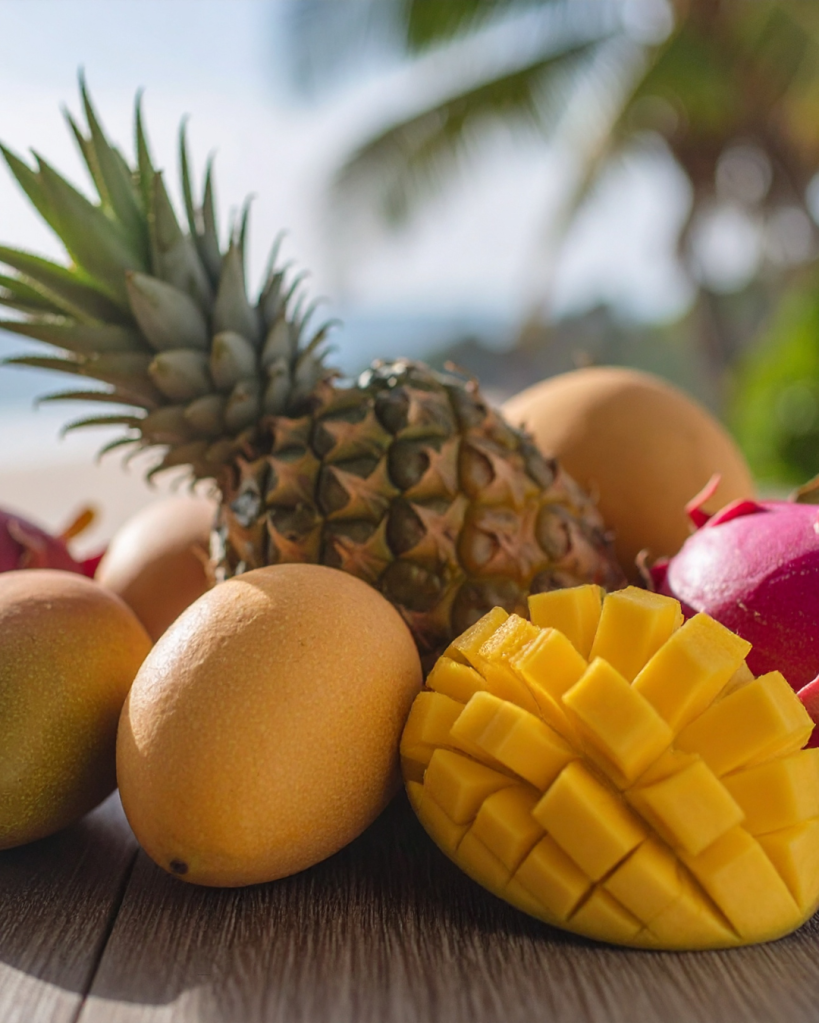
Papaya
Origins
Originally cultivated in Central America and Southern Mexico, papaya spread throughout the Caribbean, South America, Southeast Asia, and the Pacific through trade and exploration. Today it thrives across tropical climates where heat, rainfall, and rich fertile soil allow it to grow rapidly year-round.
Traditional Uses
Long before digestive enzymes appeared in supplements, papaya was already being used to support digestion and wound healing. In many tropical cultures, it became known as a fruit people reached for after heavy meals or digestive discomfort.
Nutritional Profile
Papaya’s star compound is papain – a natural enzyme that helps break down protein. It’s
also rich in:
- vitamin C
- beta-carotene
- folate
- fibre
- antioxidants such as lycopene
Health Benefits
Together, these compounds help support:
- digestion and bowel regularity
- immune function
- skin health and collagen production
- inflammation balance
- recovery after illness or exercise
In the Kitchen
Papaya works beautifully in smoothies, fruit salads, and fresh salsa, but it’s equally good
grilled alongside fish or squeezed with lime for breakfast. Frozen papaya blended with
coconut milk also makes an excellent tropical sorbet.
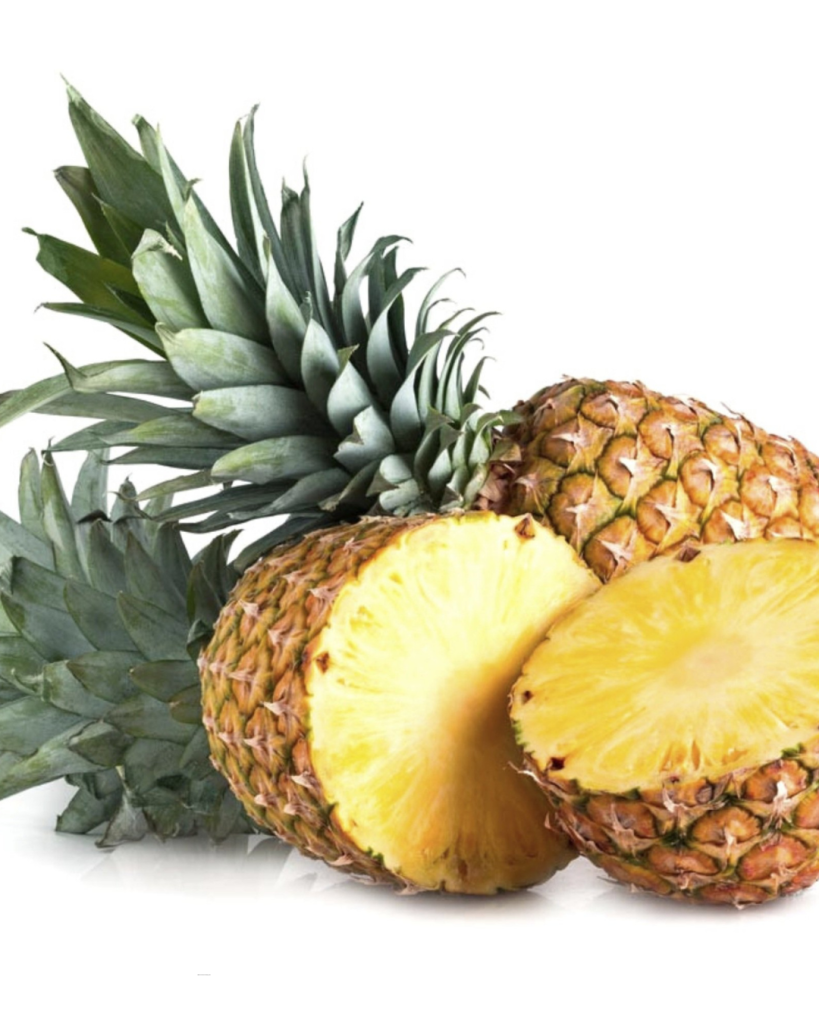
Pineapple
Origins
Native to South America, pineapple spread throughout the Caribbean and tropical regions worldwide following European exploration and trade. Its dramatic appearance and sweet flavour quickly made it one of the world’s most recognisable tropical fruits.
Traditional Uses
Indigenous communities valued pineapple not only for nourishment, but also for supporting digestion and recovery during illness. It later became associated with hospitality, healing, and celebration ceremonies across cultures.
Nutritional Profile
Pineapple contains bromelain – a group of enzymes linked to protein digestion and anti-inflammatory activity. It also provides:
- vitamin C
- manganese
- antioxidants
- fibre
- copper
Health Benefits
Research suggests pineapple may help support:
- digestion
- exercise recovery and muscle soreness
- immune function
- connective tissue health
- inflammation balance
In the Kitchen
Fresh pineapple deserves far more creativity than simply being abandoned beside cocktail umbrellas. Grilled pineapple with chilli and lime develops an almost caramel-like sweetness, while pineapple salsa works beautifully with fish, rice dishes, or tacos. It also blends perfectly into smoothies and frozen sorbets, as well as being the superstar ingredient for homemade kombucha.
If pineapple leaves your tongue feeling slightly fizzy, you’re not imagining things. Bromelain doesn’t just digest proteins in your dinner … it also starts breaking down the delicate proteins on the surface of your tongue and inside your mouth, creating that tingling, prickly feeling.
Guava
Origins
Guava originated in Central and South America before spreading widely across tropical and subtropical regions. Today it grows throughout Asia, the Caribbean, Africa, and the Pacific Islands.
Traditional Uses
For centuries, guava fruit and leaves were used traditionally to support digestion, immune health, and infection recovery. Guava leaf tea remains widely used in many cultures for stomach upset and diarrhoea.
Nutritional Profile
Guava is astonishingly nutrient-dense and contains:
- exceptionally high levels of vitamin C (some varieties contain 2-4 times more vitamin C than oranges)
- fibre
- potassium
- lycopene
- antioxidant polyphenols
Health Benefits
Guava helps support:
- immune function
- gut health and bowel regularity
- blood pressure balance
- skin health
- blood sugar regulation
In the Kitchen
Fresh guava eaten with lime and sea salt is common in many tropical regions, but it also
works beautifully in yoghurt bowls, juices, fruit salads, and homemade chia jam. Its flavour sits somewhere between pear, strawberry, and sherbet.
Mango
Origins
Cultivated in India for over 4,000 years, mango has long held cultural, spiritual, and medicinal significance throughout South Asia before spreading across tropical regions
worldwide.
Traditional Uses
In Ayurvedic medicine, mango was associated with vitality, nourishment, and overall
balance. It became valued not only for flavour, but also for supporting digestion,
nourishment and resilience.
Nutritional Profile
Mango earns its golden reputation nutritionally too. It contains:
- beta-carotene
- vitamin C
- fibre
- copper
- antioxidant polyphenols including mangiferin
Health Benefits
These compounds help support:
- eye health
- skin health
- digestion
- immune function
- cardiovascular wellbeing
In the Kitchen
Mango not only tastes luxurious but is also remarkably nutritious. It appears everywhere
across tropical cuisines – blended into drinks, folded into sticky rice, scattered through
salads, grilled over flames, or turned into chutneys and salsa.
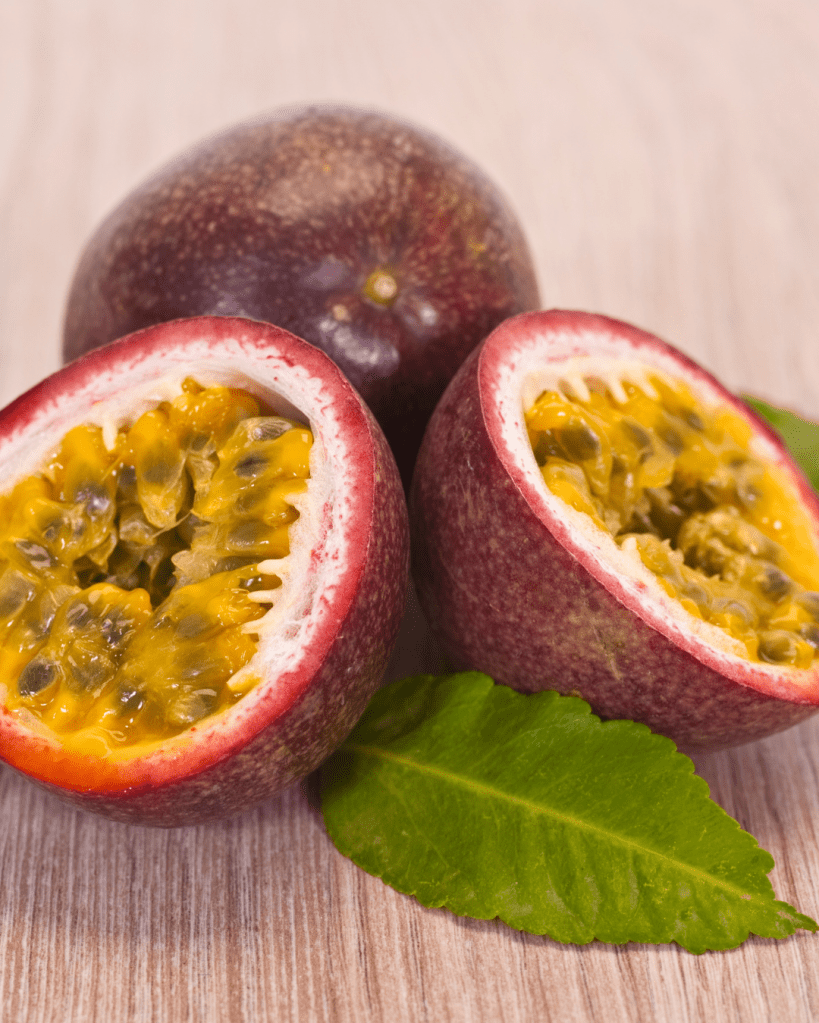
Passion fruit
Origins
Native to South America, passion fruit spread widely throughout tropical climates where it became prized for both its flavour and ornamental beauty.
Traditional Uses
Traditionally, passion fruit was associated with calming the body and supporting sleep,
digestion, and nervous tension. In some cultures, teas made from the leaves were also used for relaxation.
Nutritional Profile
Despite its small size, passion fruit contains:
- fibre
- vitamin C
- magnesium
- carotenoids
- antioxidant polyphenols
Health Benefits
Passion fruit helps support:
- gut health
- satiety and digestion
- nervous system function
- immune health
- cholesterol balance
In the Kitchen
Passion fruit works beautifully spooned over yoghurt, stirred through sparkling water,
drizzled onto fruit salads, or folded into desserts and oats. Despite its wrinkled shell, passion fruit proves that some of the best things happen beneath the surface.
Dragon fruit
Origins
Originally native to Central America, dragon fruit is now widely cultivated throughout
Southeast Asia, where its striking appearance has helped make it one of the most
recognisable tropical fruits in the world.
Traditional Uses
Historically, dragon fruit was valued largely as a hydrating food in hot climates, though
modern interest has focused increasingly on its antioxidant and gut health properties.
Nutritional Profile
Dragon fruit contains:
- fibre
- magnesium
- vitamin C
- betalain antioxidants
- prebiotic compounds
Health Benefits
These nutrients help support:
- the gut microbiome
- hydration
- bowel regularity
- immune function
- protection against oxidative stress
In the Kitchen
Dragon fruit works beautifully chilled on hot days, blended into smoothies, frozen into cubes, or added to colourful fruit platters and mocktails. It may not be the loudest fruit in taste, but visually and nutritionally, dragon fruit deserves far more credit than it usually
receives.
Coconut
Origins
Coconut palms have grown throughout tropical coastal regions for thousands of years,
particularly across Southeast Asia, the Pacific Islands, India, and the Caribbean.
Traditional Uses
In many tropical regions, coconut has never simply been food. It has historically provided
hydration, cooking oil, fuel, rope, medicine, shelter materials, and survival in harsh coastal climates.
Nutritional Profile
Different parts of the coconut offer different nutritional properties. Coconut water is
naturally rich in electrolytes, while coconut flesh provides:
- fibre
- manganese
- copper
- potassium
- medium-chain fats
Health Benefits
Coconut products help support:
- hydration
- energy intake
- satiety
- digestive health
- electrolyte balance
In the Kitchen
Coconut appears in curries, soups, rice dishes, desserts, smoothies, yoghurts, and frozen treats across tropical cuisines worldwide. Fresh coconut water drunk directly from the shell remains one of the more satisfying hydration experiences available to humans.

Açaí
Origins
Açaí berries grow naturally in the Amazon rainforest, where they have been consumed for centuries by Indigenous communities in Brazil as a staple food and energy source.
Traditional Uses
Traditionally, açaí was valued for nourishment and energy rather than marketed as a miracle superfood. It formed part of everyday diets long before smoothie bowls entered modern café culture.
Nutritional Profile
Açaí contains:
- anthocyanin antioxidants
- fibre
- healthy fats
- polyphenols
- small amounts of iron and calcium
Health Benefits
These compounds help support:
- protection against oxidative stress
- cardiovascular health
- energy balance
- satiety
- overall dietary antioxidant intake
In the Kitchen
Açaí has an earthy, rich flavour that pairs beautifully with berries, nuts, seeds, and yoghurt. Traditional preparations were often far less sweet than many modern café versions. Açaí may not possess magical powers despite what wellness marketing occasionally suggests, but it is undeniably nutrient-dense and photogenic.
More Than Just a Taste of the Tropics
Tropical fruits are more than colourful decorations for breakfast bowls or holiday buffets.
They represent generations of agricultural knowledge, traditional medicine, and nutritional wisdom carried across continents and cultures.
Perhaps one of the most refreshing things about them is that they remind us health does
not always have to look clinical, restrictive, or joyless. Sometimes it looks bright orange,
wildly spiky, neon pink, or shaped vaguely like a hand grenade.
No single fruit is a miracle cure. But collectively, these foods provide fibre, antioxidants,
vitamins, minerals, hydration, and plant compounds that support the body in remarkably
broad and important ways.
So whether you’re blending papaya into smoothies, grilling pineapple, scooping passion fruit over yoghurt, or experimenting with guava, tropical fruits offer something medicine often forgets to prioritise enough: nourishment that is both beneficial and enjoyable.
And honestly, health advice becomes much easier to follow when it actually tastes good.
Information and other content provided in these blogs should not be construed as medical advice and should not be considered a substitute for professional medical expertise. If you have any medical concerns, you should consult with your health care provider.


Leave a Reply