In today’s world, we’re wired to keep going, high speed, high performance, high productivity.
Own a home. Pay the bills. Look after the kids. Don’t neglect your parents or in-laws. Work full time. Stay social. Exercise. Cook well. Keep up hobbies. Take nice holidays.
For the most part, we cope because we have to.
Because what would life look like if we didn’t? It’s not just about us. Other people depend on us too. Much of what fills our days isn’t optional. It’s responsibility.
Obligation. The quiet, unspoken reality of adult life.
And when life is steady; when the demands are predictable, repeatable; we find a way.
It’s tiring, yes. But manageable.

When Things Start To Unravel
But then something shifts.
A unexpected curveball. An illness. A loss. A difficult colleague. Rising bills. Redundancy.
Or sometimes… nothing obvious at all. And yet, everything suddenly feels heavier.
You’re tired. Irritable. You snap more easily.
Everything feels like an effort.
You find yourself resenting others, wondering why they have it so easy.
You feel tearful. Overwhelmed. Like you just can’t keep up anymore.
You know you need rest, but it’s been so long, you don’t even know how to if you tried.
Or when you’d find the time?
You know that something has to give… but there’s nothing you can let go of.
So slowly, things start to fall away.
You stop socialising.
You stop caring for your hobbies.
Your sleep suffers.
You argue more.
And somewhere in the middle of all that, you’re left wondering:
Is this stress? Am I unwell? Is there something wrong with me?
You consider time off, but you don’t feel “sick enough.” And the guilt creeps in.
The holidays come and go, busy, full, and not quite restful.
And before you know it, it’s a new year. Hoping this one will feel different. Lighter. But deep down, you’re not sure it will.
When Your Body Starts to Feel It Too
Sometimes, your body starts to feel it too.
Aches and pains. Poor sleep. Low energy. Hormonal shifts, especially around perimenopause or menopause, can amplify everything.
And it leaves you wondering: Is this just age? Or something more?

Making Sense of Burnout
Burnout isn’t a sign of weakness.
It doesn’t pick and choose. Any age, any profession, any time, any lifestyle, given enough load, for long enough, anyone can reach that point.
It’s what happens when the tank runs empty… and refuelling no longer feels possible.
Not because you’ve done something wrong.
Not because there’s something wrong with you.
But because your body, your mind, your capacity have all reached their limit. And something needs to change.
Finding Your Way Forward
If you look closely, there are often areas where things can shift. Load that can be lightened. Boundaries that can be set or adjusted. Not always easily but often, meaningfully.
Time Out (With Purpose)
Sometimes, you need more than a weekend or a half term holiday. Taking time off work can be the reset your body, mind and spirit need. Not as an escape – but as space.
Space to rest.
Space to think.
Space to make decisions that support your future and long-term wellbeing.
That might mean reducing hours, changing roles, or putting support in place at home.
Rest alone isn’t the full solution but it creates the space and starting point for change.
Sleep
Sleep and burnout rarely sit well together. In fact, they’re often incompatible with one
another.
Even when you do sleep, it often doesn’t feel restorative.
Recovery takes time, often months, not days. But as your system settles, sleep usually does eventually catch up too.
Movement
Your body still needs to move, even when it’s the last thing you feel like doing.
Gentle, regular movement (especially outdoors) can help more than you expect.
There’s something about fresh air, natural light and beauty, and open space that softens the edges of everything piling on top of you.
Nourishment
When you’re burnt out, nutrition often slips.
Too little. Too much. Or simply the wrong things.
Your body still needs fuel: consistent, balanced, nourishing, supportive.
Think of it less as restriction, and more as giving your body what it needs to recover.
Supplements can help fill gaps – but they’re a support, not a substitute.
Treating Yourself, Differently
Treating yourself doesn’t have to revolve around food.
Food is fuel first. Enjoyment too, but not the only form of comfort or rescue.
Sometimes the more meaningful “treats” are the ones that last longer:
A massage. A walk. A quiet moment. Quality time spent with friends. Something that
genuinely helps you feel better for longer, not just briefly distracted.
Your Environment
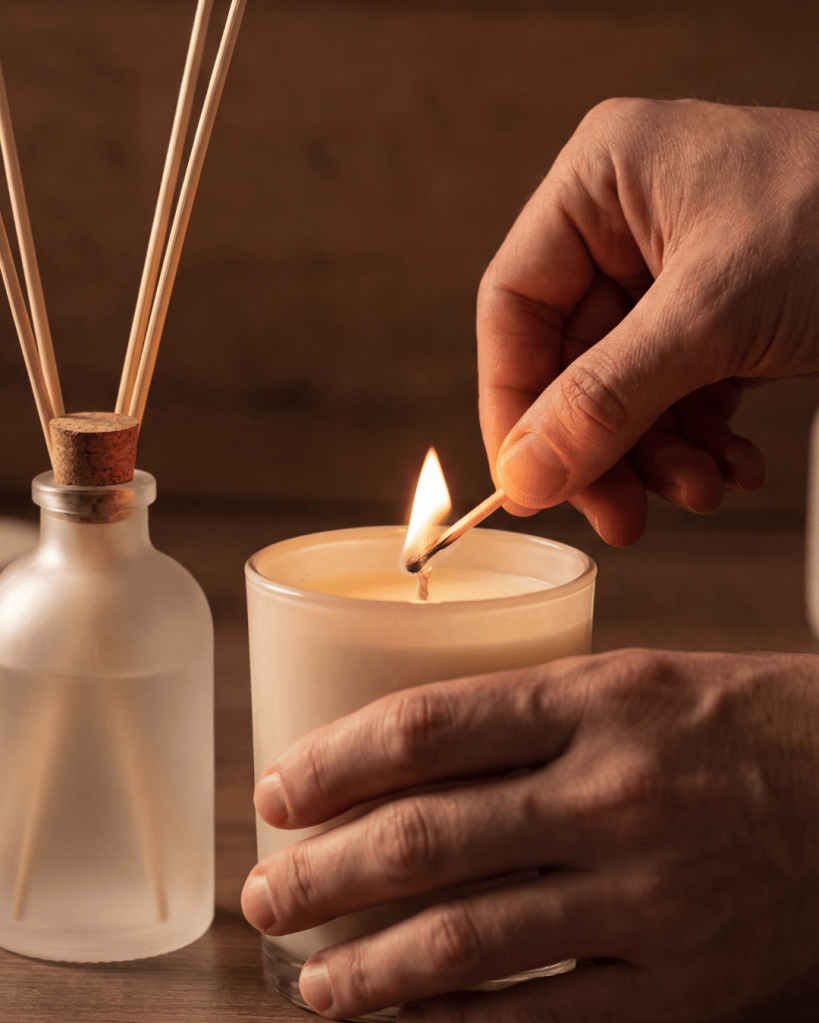
Small changes can make a big difference: a calm space, soft lighting, a scent you love.
Somewhere that feels a little roomier, quieter, more personal, less overwhelming and
more like your own sanctuary.
Talking It Through
Speaking to someone you trust – someone who understands – who’s been there
themselves – can be incredibly helpful.
Not all advice is equal. Choose people who truly get it, or who are a few steps ahead.
Professional Support
Burnout can often overlap with anxiety and depression.
Even if it doesn’t feel like the whole picture, it’s worth keeping an open mind.
Support – whether through your GP, therapy, or other avenues – can help you make sense of what’s going on and find a suitable way forward.

Hope On The Horizon
Burnout doesn’t mean you’re failing. It’s your body, mind, and spirit signalling that something needs to change. By recognising it, responding to it, taking small but meaningful steps, and giving yourself the space to reset, you can start to regain balance. Feel like you’re in control again.
Recovery takes time, patience, and support – but it is possible. And when you do, there’s every chance tomorrow will feel a little lighter, a little brighter, and a lot more manageable.
Information and other content provided in these blogs should not be construed as medical advice and should not be considered a substitute for professional medical expertise. If you have any medical concerns, you should consult with your health care provider.

 Health & Wellbeing with Dr Joanna Taylor
Leave a comment